One fun thing that happens after an ADHD diagnosis is you can start to figure out the actual reasons you do things, which in turn means you can make your life better. Because if you believe the reason behind every one of your problems is “I’m lazy and disorganized,” you’re probably not going to get anywhere. But when you know how your brain works, and why, you can ask for help, or trick yourself, or lean into your strengths.
These are the questions I’ve been asking myself lately when I’m stuck or frustrated—and they’re questions that work for quotidian issues as well as creative ones.
What would it look like if I gave up?
I mean this in the best way—giving up on stupid expectations, on things that don’t actually need doing.
Regular life: I used to feel like I was supposed to make the bed every morning, and like every day that I didn’t make the bed (99% of days) was a failure. But then about 20 years ago there was a study showing that if you make your bed first thing in the morning, you’re trapping in all kinds of gross allergens. Since then, other studies have disagreed, but I don’t care. I have probably saved like a solid month of my life by not making the bed. It’s okay.
Writing life: Please don’t give up on writing itself. But you could give up on the things (like making your dumb bed) that are taking time away from your writing. Or you could give up on the idea that you’re supposed to have a “writing routine” and write every day. (Both are completely unnecessary, and probably hive-inducing for someone with ADHD.)
Or you could give up on the part of your book you tell yourself bad stories about. Let’s say you’ve decided that you need to research the entire War of 1812 before you can write your next chapter. And you haven’t yet learned every single thing about the War of 1812, which must mean that you’re lazy, as you’ve always suspected. What if you’re not lazy, and also, you’re allowed to write about a totally fictional war that you don’t need to research. Or maybe you skip ahead in time ten years and now wowww, look, it’s 1822. It’s not that there’s an easy way out. But if you have ADHD, you’re probably used to assuming that any difficulty is entirely your fault—and so you hold onto it and beat yourself up about it, instead of realizing that maybe the thing is just a bummer, or unnecessary, or was never meant to be.
What would it look like if I made peace with how I actually do things?
This is a close cousin to the above. It’s not about skipping things, but about owning that you do them a certain way.
Regular life: I will never get into a bag or box by neatly and patiently opening the seal. It’s okay. I will just use bag clips to repair the mangled bag. It was never actually resealable anyway. I’m never going to be a morning person, and for some reason, our culture has conflated early rising with virtue. I’m working on not being mad at myself for staying up late to work and not getting up at dawn like a farmer. What if one day, when my kids are off at college, I actually managed to follow my real circadian rhythm? Would I be healthier and work better? Probably.

Writing life: There are people out there who love to give “always” and “have to” and “never” advice, which I don’t mind when it’s about, say, comma usage. But when it’s “You must write every day” or “You have to outline” or “You should never outline” or “Always keep an organized workspace,” I start throwing fruit. Same thing when people ask about my “daily writing routine.”
Maybe I can’t sit normally in a desk chair. That’s okay. Maybe I work on five projects at once. Maybe I’m writing this post by starting ten different paragraphs and then working on them in somewhat random order. Maybe I don’t write for two whole weeks and then spend a whole weekend writing. Maybe I will never, ever, ever be someone who gets up early to write.
Guess what? Writing earlier in the day does not make you a better writer. Neither does writing every day. Having a neat desk has zero impact on the quality of your work. If these were the keys to everything, all you’d have to do is wake up at 3:00 every morning and write 2,000 words at your immaculate desk, and you’d have a Pulitzer. But wait, what if someone out there woke up at 2:00 instead? Now he’s the better writer!! Oh noooooo!
It doesn’t work that way. Do whatever. Write with your feet! No one cares. And working in a way that suits you and your mind is going to produce better work.

That last sentence seems too obvious to linger on. But if you are an adult who went through school with undiagnosed ADHD, please read it again. It’s really hard to let go of the idea that doing things in the most uncomfortable possible way will bring a better result. Good writing will be hard, hard work—but the work should be about digging deep, not about keeping your files organized.
What would it look like if I asked for help?
(And I want to be clear here that I mean help from a HUMAN. Or maybe a dog. Not a malicious robot.)
Regular life: I’m trying to get better at saying things like “I’m worried I won’t ever manage to schedule this blood test, so if you schedule it for me I’ll plan our entire vacation in exchange.” It’s hard, because the reflex to mask is strong and has been reinforced over a lifetime.
Writing life: Ask a friend to hold you to deadlines. “Body double” by getting someone to work beside you, or just on Zoom with you. Take a class and get feedback. Ask your new friend from the class to help brainstorm an outline with you. Return the favor. Go to a reading at your local bookstore or online, and ask the author how they dealt with the same issues of character development that you’re struggling with*. Tell the barista at the coffee shop that you’ll give her five dollars every time she catches you looking at your phone.
*Without making the question about you. Don’t be that person.
What would it look like if I threw money at it?
Don’t worry, this is not just for rich people. I’ve found it possible to solve a lot of problems by asking “What would someone with limitless resources do?” and then realizing that I could basically do a version of that without being a zillionaire.
Regular life: I got tired of constantly forgetting a hairbrush or lip balm or sunscreen Benadryl, so a few months ago I bought a cheap second one of everything and organized it all in a nifty trunk in my car. Two concurrent mascaras will last me as long as two sequential mascaras, so I’m not wasting much money. (And I can’t tell you how many times I’ve pulled over at a pharmacy to purchase an extra whatever that I’d forgotten, thus replicating the five I had at home, so it’s possible I’m actually saving money.)

Writing life: A rich person would go stay at a five-star resort to get a novel draft done in a sort of sensory deprivation zone. That might not be in your budget, but could you volunteer to house-sit for out-of-town friends? I did this in 2020 when all residencies were cancelled, and I ended up with three different friends-of-friends offering their houses in exchange for plant watering. It was like having a second home with no distractions in it.
What would it look like to embrace inconsistency?
I’ve been thinking of this as the 1960s Swinging Bachelor method. The swinging bachelor was not beating himself up for his lack of monogamy; he was dating someone new every week and also he was very drunk on martinis, neither of which I actually recommend. But ADHDers thrive on variety, which is why we can get so excited about a new organization system and use it exactly once. But what if that isn’t a failure?
Regular life: It is infinitely easier for me to spend all Saturday organizing the bathroom closet in some new way than for me to consistently put things back in the same place every other day of the week. What if that’s okay? I buy new vitamins and they don’t fit in the vitamin space, and now everything falls apart. Okay, so it’s time for a new organization method, one that will last me a couple of months. And by reorganizing I’m seeing that the Pepto is expired and we’re out of large bandages, which I wouldn’t have realized if I hadn’t reorganized. It’s all wins.
Writing life: You get really into this one kind of outline, and then you abandon it. But you did the outlining, and you learned a lot from it. Then you try this whole thing with notecards, exactly once. Then you spend a week doing a storyboard on your wall and then you never touch it again. But maybe you’ve learned more, by doing all this, than you would have if you’d stuck to one tidy outline the entire time.
Or: You decide to be a morning writer, and you last six days. Then you get a cool standing desk thing but you never use it. Then you write in the coffee shop all weekend. Then you do a voice-to-text thing, which works until it doesn’t. Then you try some kind of app where whenever you work, you get points that keep an animated hedgehog alive. Then you forget the hedgehog. Society has taught you to see this as a failure of consistency, rather than a success of variety.
Swingin’ Bachelor approves of your dalliances. He lifts his martini in your direction.

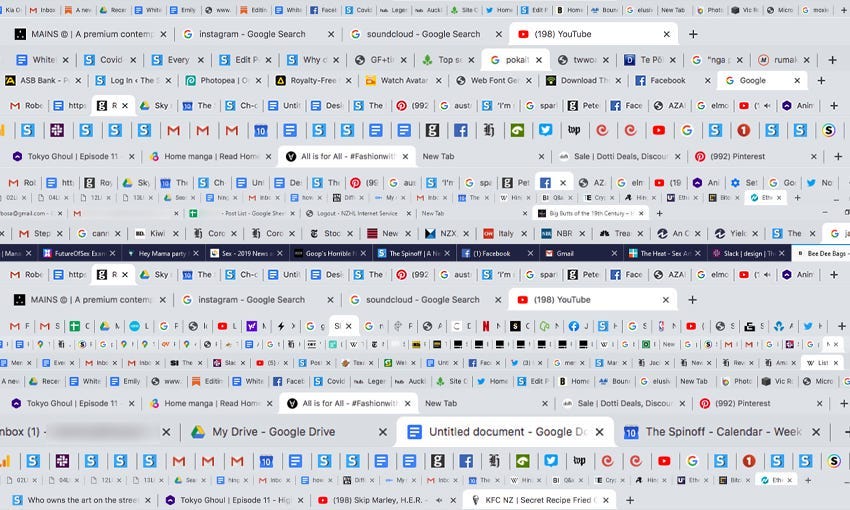
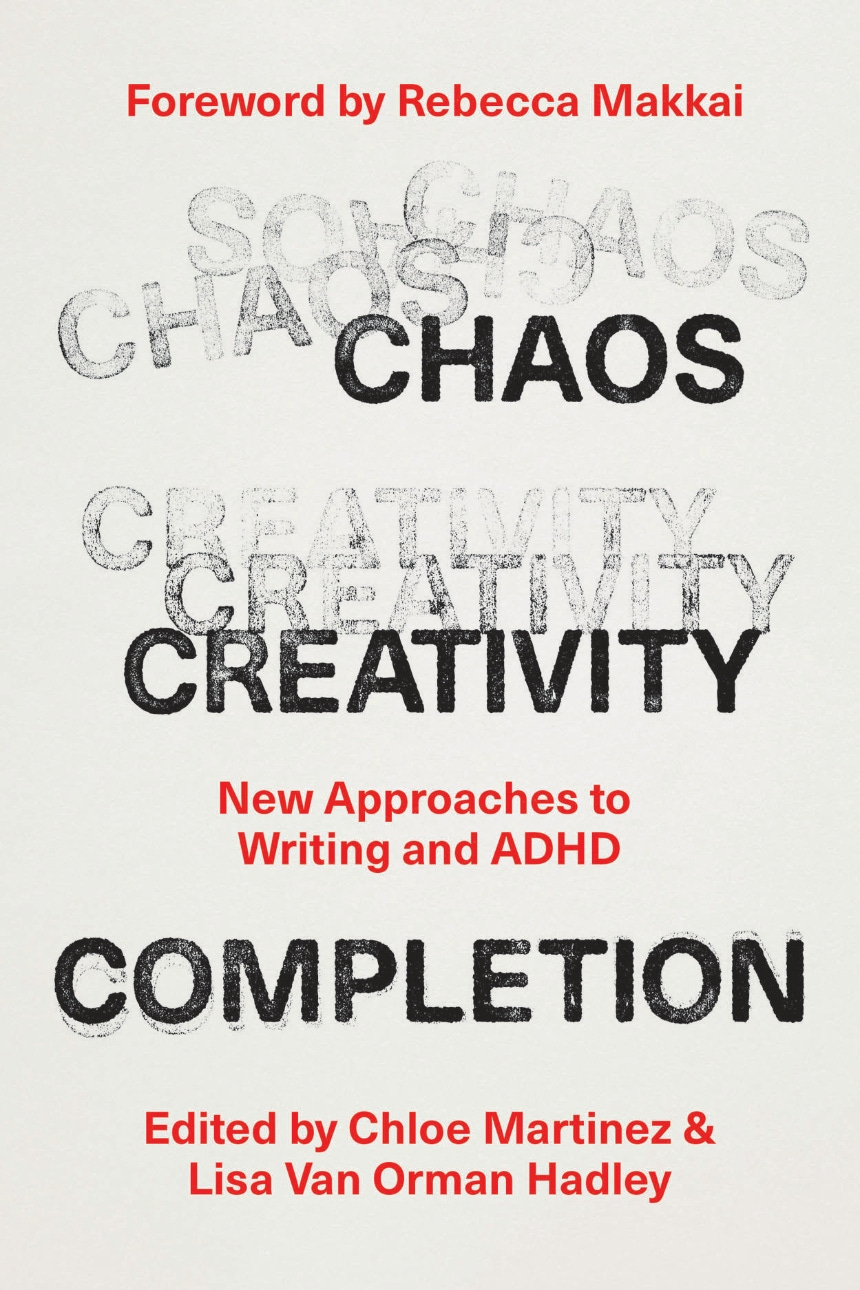
Speaking of… all of this: I was honored to write the introduction to this new anthology, Chaos Creativity Completion: New Approaches to Writing and ADHD, with essays (some more lyrical/personal, some more practical) by an amazing slate of authors. After the break, I’ll post a piece of that introduction for paid subscribers—but if this topic is of interest, I recommend just ordering the book now, and not leaving this tab open on your laptop for three months because you’re not ready to order it yet but you can’t close it because then you’ll forget, but then there are 90 tabs and finally you have to restart your computer and they’re all lost. I see you there.